
"mechanical harvesting"
1000 article(s) found

Planting and harvesting of coffee trees
The first people to drink coffee lived in Ethiopia. A drink called "Buncham" was found in the Arab scientific literature of 900-1000 AD, but it is not certain that it is coffee.

The growth cycle and picking time of coffee
Coffee beans are the seeds of coffee trees. After three or four years of growth, the coffee tree matures and begins to bear fruit, with one fruit arranged in clusters or clusters along the branches.

Introduction to Jamaica Blue Mountain Coffee with the Best Growing Conditions
The coffee industry in Jamaica faces a number of problems, such as the effects of hurricanes, increased labor costs and difficulties in mechanizing terraces. Many small estates and farms are difficult to rationalize. Blue Mountain Coffee, however, is one of those coffee retailers that value credibility and want to stock some coffee anyway. A leading British retailer says he's ready to sell whatever the price.

Take the beans in the sun. Wash and bask in half the sun. Semi-washing
Today, I'd like to introduce the way to get beans from coffee: everyone knows citrus. Banana。 Apples and other fruits are rich in organic acids, immature fruits eat sour and astringent taste, ripe fruits taste sweet and delicious, because the organic acids of the fruit are converted into sugar. Coffee should also be picked after it is red and ripe, and the beans are more sweet. If the coffee farmer wants to save trouble, regardless of the coffee fruit

Characteristics of coffee producing areas in Minas Gerais, Brazil. Introduction to the flavor of Brazilian Hirado coffee.
The state of Minas Gerais (Minas Gerais) is a state in southeastern Brazil. Minas Gerais has some of the highest mountains in the country, providing the elevation needed to grow coffee. Coffee produced on behalf of the state of Minas Gerais often holds 70 per cent of the medals in the annual COE Cup in Brazil. Cerrado with no bitterness,

The way coffee beans are treated after picking.
Every winter (dry season) is the harvest time for coffee beans. After three to four years of growth, coffee trees mature and begin to bear fruit. The fruits are arranged in a string or clustered together next to the branches. Coffee beans are wrapped in red skins and can be picked as soon as they turn red. Most Arabica coffee beans mature from June to August and Roberts coffee beans from September to October. therefore,

Brazil approves registration of herbicide Heat on coffee crops
Heat is a conditional selective contact herbicide containing pyrimidine diketone active substance phenylsulfonamide. Benzenesulfonate is registered under the brand name Kirox all over the world. It is a flexible active molecule in terms of application time. It can be used before sowing, directly spraying to wither the weeds without touching the crops. BASF said the herbicide had different mechanisms of action.
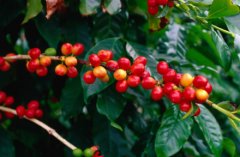
The beans of coffee are taken in the sun. Wash and bask in half the sun. Semi-washing
Today, I'd like to introduce the way to get beans from coffee: everyone knows citrus. Banana。 Apples and other fruits are rich in organic acids, immature fruits eat sour and astringent taste, ripe fruits taste sweet and delicious, because the organic acids of the fruit are converted into sugar. Coffee should also be picked after it is red and ripe, and the beans are more sweet. If the coffee farmer wants to save trouble, regardless of the coffee fruit

The way to pick up beans: in the sun. Wash and bask in half the sun. Semi-washing
Today, I'd like to introduce the way to get beans from coffee: everyone knows citrus. Banana。 Apples and other fruits are rich in organic acids, immature fruits eat sour and astringent taste, ripe fruits taste sweet and delicious, because the organic acids of the fruit are converted into sugar. Coffee should also be picked after it is red and ripe, and the beans are more sweet. If the coffee farmer wants to save trouble, regardless of the coffee fruit
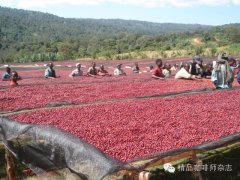
Coffee beans harvesting Coffee beans harvesting
Coffee beans are the seeds of coffee trees. After three to four years of growth, coffee trees mature and begin to bear fruit, one fruit after another arranged in clusters or clusters along the branches. The seed is covered with a peel that can be picked as soon as it turns red. Below the red skin (exocarp) is a layer of flesh (mesocarp), inside is a small thin layer, and further inside is a layer like parchment
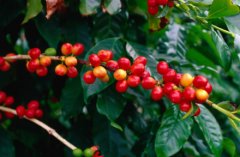
The picking of coffee beans coffee beans are the seeds of coffee trees.
Coffee beans are the seeds of coffee trees. After 3-4 years of growth, the coffee tree matures and begins to bear fruit in clusters or clusters along the branches. The outside of the seed is a layer of peel, which can be picked as soon as it turns red. Under the red skin (exocarp) there is a layer of pulp (mesocarp), which is a small thin layer, and then a layer of material endocarp like parchment. In all

High-quality coffee beans are taken in the sun. Wash and bask in half the sun. Semi-washing
Today, I'd like to introduce the way to get beans from coffee: everyone knows citrus. Banana。 Apples and other fruits are rich in organic acids, immature fruits eat sour and astringent taste, ripe fruits taste sweet and delicious, because the organic acids of the fruit are converted into sugar. Coffee should also be picked after it is red and ripe, and the beans are more sweet. If the coffee farmer wants to save trouble, regardless of the coffee fruit

Coffee beans are treated and taken out in the sun. Wash and bask in half the sun. Semi-washing
Today, I'd like to introduce the way to get beans from coffee: everyone knows citrus. Banana。 Apples and other fruits are rich in organic acids, immature fruits eat sour and astringent taste, ripe fruits taste sweet and delicious, because the organic acids of the fruit are converted into sugar. Coffee should also be picked after it is red and ripe, and the beans are more sweet. If the coffee farmer wants to save trouble, regardless of the coffee fruit

Santa Isabella Manor Coffee Variety
Professional coffee knowledge exchange more coffee bean information please follow the coffee workshop (Wechat official account cafe_style) St. Isabel's annual precipitation is about 3500 mm, with 9 to 10 months of regular rainfall every year. Continuous Rain Water (mostly drizzle) means that flowering is very staggered, with 8-9 blossoms each year. Due to the prolonged flowering period, coffee ripens at different stages.
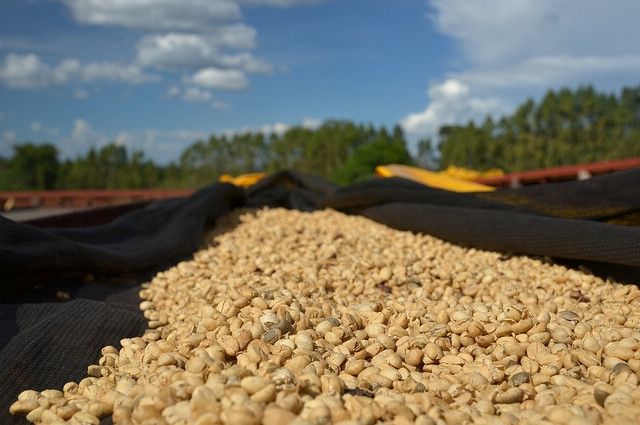
China Coffee Network recommends American boutique coffee beans Coffee Raw Bean treatment introduction Solar selection of beans
Sun treatment will first identify sunken beans in the sink, that is, ripe or half-ripe beans are spread in the drying farm for natural drying. The specific time depends on the local climatic conditions, which usually takes two to four weeks. When the moisture of the coffee bean is reduced to 12%, then use a sheller to grind off the hard pulp and silver skin. The requirement of the sun treatment on the climate is very high.

Brazilian Minas Coffee introduction: Minas Matas's road to counterattack
Professional coffee knowledge exchange more information about coffee beans please follow the coffee workshop (Wechat official account cafe_style) Brazil is the world's largest coffee producer, accounting for the world's total output of 1 canap 3. Brazil, which is located in the tropical rainforest, is relatively flat, has few high-altitude mountain forests, and does not have much shade, which makes Brazilian beans grow fast but the coffee is soft.

The method of taking beans: the difference, operation introduction and advantages of sun, water washing and half-sun and half-washing.
Today, I'd like to introduce the way to get beans from coffee: everyone knows citrus. Banana。 Apples and other fruits are rich in organic acids, immature fruits eat sour and astringent taste, ripe fruits taste sweet and delicious, because the organic acids of the fruit are converted into sugar. Coffee should also be picked after it is red and ripe, and the beans are more sweet. If the coffee farmer wants to save trouble, regardless of the coffee fruit

Aromatic and mild Salvadoran fine coffee bean varieties cultivation market price profile
Coffee fields are endless, and most of them are harvested mechanically to meet economic benefits. When 75% of the coffee fruit in the coffee garden turns red, the mechanical harvesting is started, followed by the same pre-operation of washing, which is transferred to the sink to remove the floating beans, sifting out the sunk beans, and then using a large pulp sifter to remove the pulp and remove the pods covered with pectin. The next stage is separate from the water wash: sticky beans

The fruit of coffee tree is picked. Introduction to the process of how to make coffee.
In the washing type, the harvested fruit is poured into the sink, the floating matter is removed, the fruit in the water is moved to the pulp removal machine, the outer skin and pulp are removed, and then put back into the tank to remove the floating matter, the core in the water is poured into the fermentation tank, soaked for half a day or one day, the colloid on the surface of fermented beans is removed, washed, dried or mechanically dried, and the endocarp is removed on the sheller to form commercial raw coffee beans.

Introduction to the treatment methods and methods of coffee beans there are several treatment methods of coffee beans
Pulped-natural, also known as honey treatment (Miel Process in Spanish), is said to refer to the process of making raw beans that are sun-dried with mucous membranes. The honey treatment process is vulnerable to pollution and mildew, so it needs to be closely watched throughout the process, constantly turning, and speeding up drying, so as to avoid bad fermentation flavor. Its advantage is that it can best preserve the original sweetness of the ripe fruit of coffee.